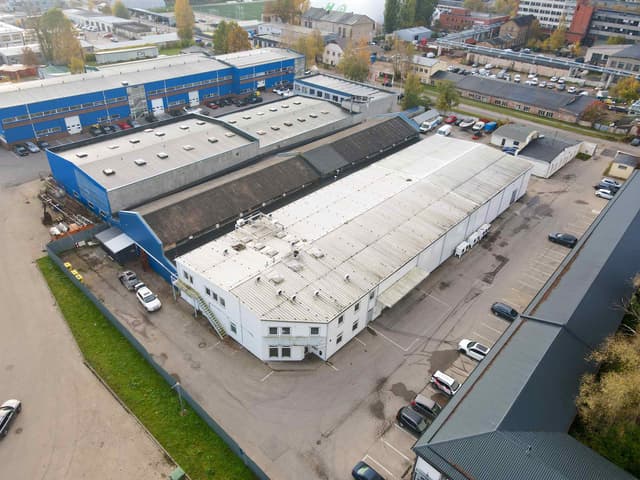
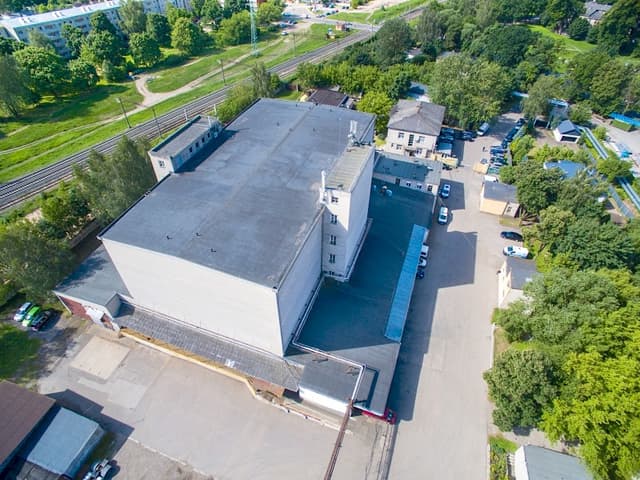
Frozen fries, dairy, fresh fish and many medicines pass through cold storage on their way to a shop or pharmacy in Latvia. A refrigerated hall is a different building from an ambient warehouse. The specifications that decide its running costs are easy to miss on a viewing, and some of the rules that apply to the goods also apply to the building you lease.
This guide covers the two main temperature regimes, the specs that drive operating costs, the Latvian and EU rules that apply, and what to check before signing a cold storage lease.
Two temperature regimes
Cold storage splits into two main categories, each with its own infrastructure, energy costs and operating demands.
Frozen storage (–18 °C to –25 °C)
EU law sets the baseline: quick-frozen food must be kept at –18 °C or colder at every point in the product, with brief rises of no more than 3 °C allowed during transport (Directive 89/108/EEC). Some products are held colder: ice cream is often stored at –22 °C to –25 °C to protect its texture.
Freezers are the most capital-intensive type of cold store. The insulation panels are thicker (typically 150–200 mm of polyurethane), the refrigeration plant is larger and energy use is higher. The slab also needs heating underneath. Without it, the ground below freezes, expands and cracks the floor (frost heave).
Typical products at –18 °C to –25 °C: frozen food, ice cream, seafood, meat, ready meals, frozen dough and medicines that need deep-freeze storage.
Chilled storage (+2 °C to +8 °C)
The chilled regime holds goods between +2 °C and +8 °C, most often at +4 °C to +6 °C for fresh produce and dairy. This range slows bacterial growth without freezing the product.
Chilled warehouses cost less to build and run than freezers, but stock turns over fast and the docks are busy. Fresh goods have short shelf lives, so the building needs high-speed doors, dock seals that hold the temperature during loading and often a temperature-controlled staging area.
Typical products at +2 °C to +8 °C: dairy, fresh fruit and vegetables, flowers, beverages, fresh meat and fish, and medicines labelled for refrigerated storage.
Key technical specifications
Beyond the setpoint, a handful of specifications separate a cold store that is cheap to run from one that is not.
Insulation and envelope
| Parameter | Frozen (–18 °C to –25 °C) | Chilled (+2 °C to +8 °C) |
|---|---|---|
| Panel thickness | 150–200 mm PUR/PIR | 80–120 mm PUR/PIR |
| Floor insulation | Required, plus floor heating | Required, no floor heating |
| Vapour barrier | Critical, on both sides | Standard |
| Air locks or strip curtains | At every transition | Recommended |
Panel thickness feeds straight into the energy bill. Thin insulation saves the developer money once, and then the refrigeration plant works harder every hour of a 5–10 year lease.
Refrigeration and refrigerants
Modern cold stores typically run on ammonia (NH₃) or CO₂. Ammonia is very efficient and has zero global warming potential, but it needs gas detection, ventilation and emergency procedures. Older and smaller plants often use HFC blends, and for those the EU F-gas Regulation (EU) 2024/573 matters to a tenant:
- Since 1 January 2025, virgin refrigerants with a global warming potential (GWP) of 2,500 or more may not be used to service refrigeration systems of any size. Reclaimed or recycled gas remains allowed until the end of 2029. R404A, a common older freezer refrigerant, is above that line.
- From 2032, the limit for servicing most stationary refrigeration with virgin gas drops to GWP 750.
- Systems need leak checks at intervals set by the size of the refrigerant charge, from every 12 months down to every 3, and less often where a leak detection system is fitted.
If the plant runs on a high-GWP blend, a conversion or replacement is coming. Get in writing who pays for it and how long the store may be out of service.
Then ask who pays for the energy. Refrigeration is usually the largest electricity user in a cold store. Clarify whether it is included in the service charge or billed separately, and whether you pay for a share of a common plant or for your own metered zone. Since February 2026, Sadales tīkls has provided actual 15-minute metering data in its e-st.lv portal, so a landlord can show you a full year of the store's load profile, including the night-time base load that exposes weak insulation or leaking doors.
Loading infrastructure
Most temperature loss happens at the dock. Each time a door opens, warm air gets in and the plant has to recover. Look for:
- Dock shelters or dock seals: inflatable or foam seals that close the gap between the trailer and the building
- High-speed doors between temperature zones to limit air exchange
- Temperature-controlled staging areas: buffer zones, often at +10 °C to +12 °C, between the dock and the main store
- Ante-chambers: important in freezers, where the difference between summer air outside and the store inside can exceed 40 °C
Floor load capacity
Freezer racking is often taller, to make the most of expensive cooled volume, and that means heavier point loads on the slab. A floor rated at 5 t/m², standard in ambient warehouses, may not carry high-bay cold storage racking. Check the floor load specification, and in a freezer check that the floor heating was designed for the planned load. The floor load guide explains point loads.
Clear height and storage density
Every cubic metre of cooled air costs money to keep cold, so clear height matters even more than in an ambient warehouse. At roughly one racking level per 2 m, a freezer with 12 m clear height takes 5 levels and one with 8 m takes 3, while the refrigeration cost per square metre does not fall in proportion. Cost per pallet position is much lower in taller cold stores. The clear height guide has the full calculation.
Rules that apply in Latvia
The goods you store bring their own rules, and some of them attach to the building:
- PVD approval. A warehouse that will hold products of animal origin needing a set temperature regime must be approved by the Food and Veterinary Service (PVD), not only registered, under Cabinet Regulation No 104 on the approval and registration of food businesses. Storage of products that need no temperature control is exempt from approval but still has to be registered. PVD starts the procedure only after the building has been commissioned, so on a new build, plan the approval into your move-in date.
- Temperature records. For quick-frozen food, Regulation (EC) No 37/2005 requires instruments that record air temperature at frequent, regular intervals and comply with EN 12830. The records must be dated and kept for at least one year. Ask whether the landlord's monitoring system meets this or whether you need your own.
- Medicines. Pharmaceutical storage follows the EU Guidelines on Good Distribution Practice (2013/C 343/01), which call for temperature mapping of the storage area before use and again after significant changes. Medicine wholesalers in Latvia are licensed by the State Agency of Medicines (ZVA). Ask for the latest mapping report and who repeats it.
Multi-temperature facilities and build-to-suit
Some logistics parks around Riga offer multi-temperature buildings, with separate frozen, chilled and ambient zones under one roof. They suit food distributors and 3PL operators with mixed product ranges: one receiving dock, one stock system, one address. The risk is shared plant. If one refrigeration system serves several zones, a single failure hits all of them, so ask about redundancy: spare compressors, dual power feeds and generator capacity.
New cold capacity takes time to arrive. In October 2026, Colliers reported that Riga developers start new phases only once there is pre-leasing, and a refrigerated hall is the most tenant-specific space there is, so expect new cold stores to be built to suit, with lead times to match. Temperature-sensitive pharma is one area that is adding space: Recipe Plus, a medicines distributor, is building a 13,800 m² logistics centre in Riga for €20 million, due in spring 2027.
What to check before signing a cold storage lease
A cold storage lease carries points that an ambient lease does not. Before committing:
- Energy cost structure: is refrigeration energy in the rent, in the service charge or billed separately? What was the consumption per m² or per pallet position over the last 12 months?
- Temperature guarantee: does the lease state the range the landlord must hold, how it is recorded and what happens after a deviation?
- Backup power: is there a diesel generator, and how many hours can it run? In a freezer, a 24-hour outage without backup can mean losing the whole stock.
- Refrigerant and plant: which refrigerant is in the system, who maintains the plant, and who pays for compressor replacement and any F-gas conversion?
- Approvals: is the building already PVD-approved for your product category, and who applies if not?
- Insurance: cover for goods in cold storage can cost significantly more, and some landlords require set cover levels.
- Flexibility: can you add temperature zones, or switch a chilled zone to frozen, if your product mix changes?
Use the lease cost calculator to model your total occupancy cost, including energy, service charges and fit-out amortisation. In cold storage, the headline rent on its own can mislead.
Compare cold storage and warehouse options across Latvia on rentful.eu: properties side by side, pallet positions and real costs before you commit.
Sources: Directive 89/108/EEC on quick-frozen foodstuffs; Commission Regulation (EC) No 37/2005, Article 2; Regulation (EU) 2024/573 (F-gas), Articles 5 and 13; Regulation (EC) No 853/2004, Article 4; Cabinet Regulation No 104 and PVD guidance on LV portāls, 17 October 2022; EU Guidelines on Good Distribution Practice of medicinal products, 2013/C 343/01; Sadales tīkls; LSM, 27 January 2026; Colliers Baltic Property Snapshot Q3 2026; LSM, 14 August 2026 (Recipe Plus).